

In an era where plumpness is prized, it’s no surprise that fillers have become one of the most . But not everyone is eager to commit to injectables. Enter Volufiline, a trending skincare ingredient that’s generating buzz for its alleged ability to help skin appear fuller and more voluminous.
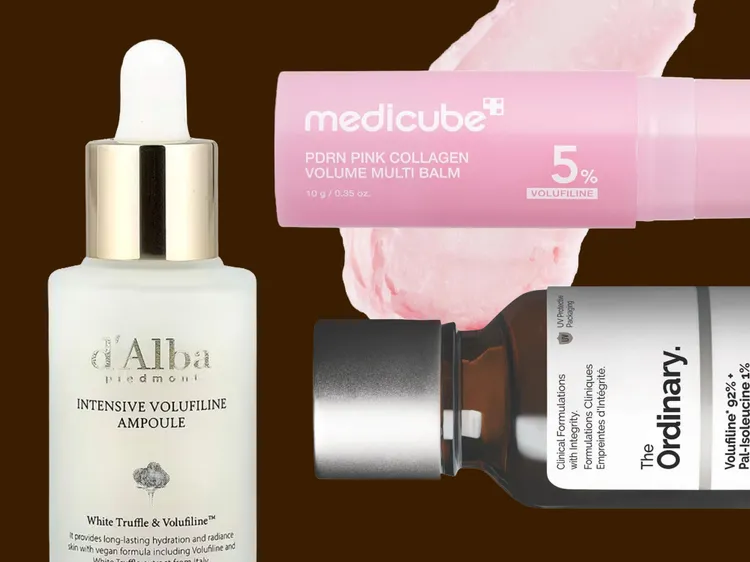
Chances are, you’ve heard about it on TikTok and Instagram. “It’s been trending heavily on social media and online searches have gone up over 200% in the past year, so I’ve been getting a lot of questions about it from patients,” says Anna Karp, DO, a board-certified dermatologist in New York City. Read on for everything you need to know about Volufiline.
What Is Volufiline?
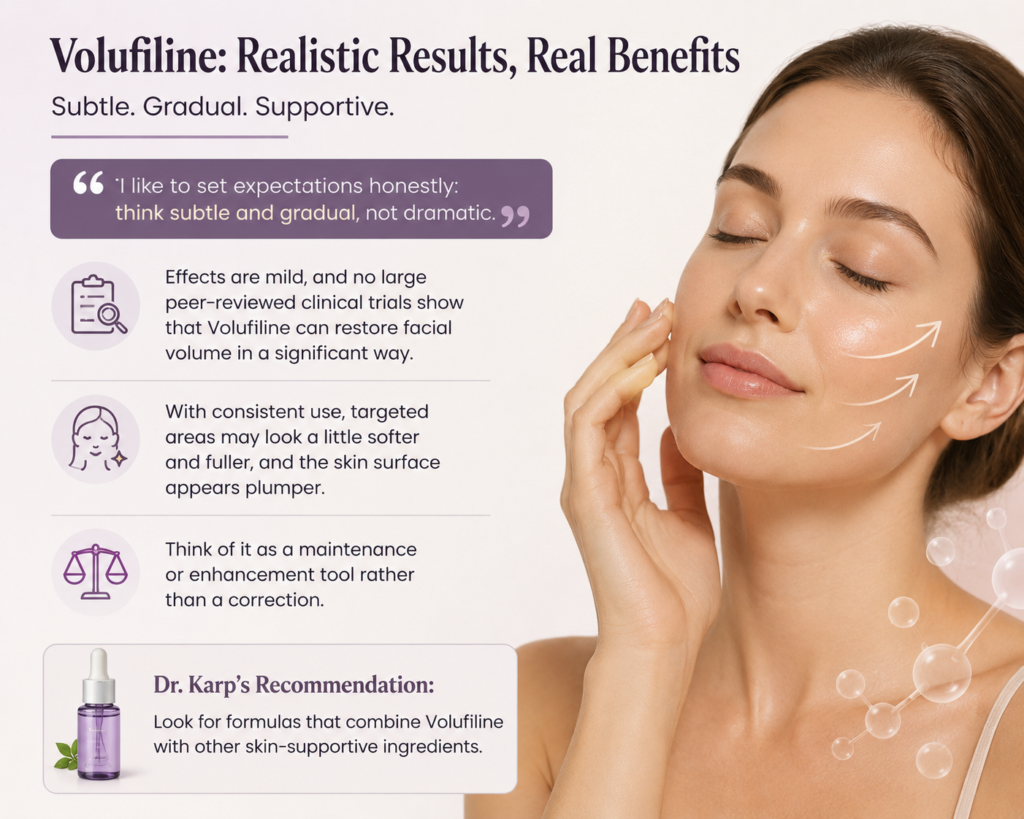
If you aren’t expecting the same results from Volufiline as from injectable fillers, the ingredient can still be great. “I like to set expectations honestly: think subtle and gradual, not dramatic,” Dr. Karp says. “Any effects are mild, and no large peer-reviewed clinical trials are showing that Volufiline can restore facial volume in a significant way. What patients may notice with consistent use is that targeted areas look a little softer and fuller, and the skin surface appears plumper. Think of it as a maintenance or enhancement tool rather than a correction. For people interested in trying it, I generally recommend looking for formulas that combine Volufiline with other skin-supportive ingredients.”
paragraph
It can be used on any area of the face where you might be looking to create more volume, particularly the lips, cheeks, jawline, under eyes, nasolabial folds, and neck. “It can be found in various creams and serums and can be used on the body as well as face, basically any area where you are looking to create more volume,” explains Ron Robinson, cosmetic chemist and the founder of Beautystat. In product ingredient lists, you’ll typically see it listed as hydrogenated polyisobutene and anemarrhena asphodeloides root extract.
How Does It Work?
“There is almost no independent research on how it really works, but one thought is that it enhances skin volume by encouraging fat cells under the skin to hold onto more fat,” Dr. Park says. “Other research shows weak evidence that the active compounds in Volufiline can have some anti-aging and anti-wrinkling effects.”
The Benefits
Beyond the potential volume effects, Volufiline serums can also improve skin texture, leaving it smoother and more even, according to Dr. Karp. “It’s also well-tolerated, plant-derived, and it can be layered easily into an existing routine,” she says. “The accessibility factor matters too: it’s non-invasive, there’s no downtime, no needles, and no appointments. For patients who are filler-curious but not filler-ready, it’s a low-commitment way to explore volume support.”
Does It Work for Everyone?
“Results can vary widely from person to person,” says Daniel Behroozan, MD, FAAD, FACMS, a double board-certified dermatologist. “Factors that may influence outcomes include age, skin quality, degree of volume loss, product formulation, consistency of use, and individual biological response.”
The Risks
It can be used on most skin types except for sensitive or acne-prone skin, according to Robinson. “If you have a concern about using it, it is best to patch test to make sure you don’t have any allergic reactions to it,” he advises.
“Volufiline is generally considered well-tolerated when used as directed in cosmetic formulations,” Dr. Behroozan says. “However, as with any skincare ingredient, side effects can occur and may include redness, irritation, itching, sensitivity reactions, breakouts in acne-prone skin, and allergic reactions to other ingredients within the formula.”
Can It Replace Filler?
“In my opinion, Volufiline does not replace the benefits you could achieve with filler,” Dr. Park says. “Injectable filler quite literally replaces volume under the skin, with results that are immediate and consistently measurable. Even if the claims of Volufiline are verifiable, it would have minimal to no effect in facial restructuring, the way filler can do.”
The Final Takeaway
If you aren’t expecting the same results from Volufiline as from injectable fillers, the ingredient can still be great. “I like to set expectations honestly: think subtle and gradual, not dramatic,” Dr. Karp says. “Any effects are mild, and no large peer-reviewed clinical trials are showing that Volufiline can restore facial volume in a significant way. What patients may notice with consistent use is that targeted areas look a little softer and fuller, and the skin surface appears plumper. Think of it as a maintenance or enhancement tool rather than a correction. For people interested in trying it, I generally recommend looking for formulas that combine Volufiline with other skin-supportive ingredients.”
